VS
Not medical advice. This content is for informational purposes only, backed by cited research. Consult a healthcare provider for personal guidance.
MiraLAX vs Citrucel: Which Should You Take? (2026)
Updated 2026-08-14 · Sources cited below

Quick Verdict
MiraLAX treats constipation you already have — it draws water into your intestines and reliably produces results in 1-3 days, with grade A evidence behind it. Citrucel is a gentle daily fiber supplement whose main selling point is comfort: methylcellulose doesn't ferment, so it causes far less gas than psyllium. But that gentleness comes with a catch — methylcellulose has much weaker efficacy evidence than either MiraLAX or psyllium. If you have to pick one for constipation, pick MiraLAX.
Head-to-Head Comparison
| MiraLAX | Citrucel | |
|---|---|---|
| Type | osmotic | fiber |
| Active Ingredient | Polyethylene Glycol 3350 (PEG 3350) | Methylcellulose |
| Onset Time | 1-3 days | 12-72 hours (daily use) |
| Duration | Varies (use daily until regular) | Ongoing daily supplement |
| Dosage Forms | Powder | Powder, Caplets |
| Price | $31.47 | $18.59 |
| Best For | Daily use | Sensitive stomachs (less gas than psyllium) |
| Our Rating | 4.5 / 5 | 3.3 / 5 |
MiraLAX and Citrucel sit next to each other on the pharmacy shelf, but they're built for different jobs — and one of them has much better evidence than the other. This comparison matters most for people with sensitive stomachs, because Citrucel's whole identity is "the gentle fiber," and it's worth being clear-eyed about what that gentleness does and doesn't buy you.
What's the Actual Difference?
MiraLAX is polyethylene glycol 3350 (PEG 3350), an osmotic laxative. It works by holding water in your intestines, which softens stool and increases its volume until your body's natural urge takes over. It's a treatment: you take it because you're constipated, and it fixes that.
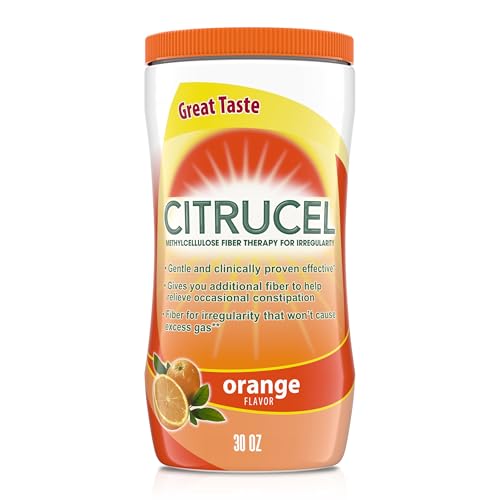
Citrucel is methylcellulose, a bulk-forming fiber supplement. It absorbs water and adds soft bulk to stool, which is meant to keep things moving day after day. It's maintenance: you take it so constipation doesn't happen in the first place.
That treatment-versus-maintenance distinction drives almost every practical difference between them — speed, evidence, and who each one suits.
Which Has Better Evidence?
This is where the comparison stops being close. PEG 3350 is one of the best-studied constipation treatments in existence, with a strong recommendation in the AGA-ACG clinical practice guideline for chronic idiopathic constipation. Gastroenterologists reach for it first, in adults and children alike.
Citrucel's evidence is much thinner. The 2022 updated meta-analysis of fiber supplementation for chronic constipation found psyllium effective — methylcellulose was not among the fibers shown to work. Citrucel's real claim to fame is tolerability, not proven efficacy. Bulking fiber isn't useless, and plenty of people are satisfied with it, but if you're choosing based on what's most likely to work, MiraLAX isn't just ahead — it's in a different category.
Which Is Gentler?
Both are gentle, and this is Citrucel's home turf. Methylcellulose is non-fermentable: your gut bacteria can't digest it, so it produces very little of the gas and bloating that makes people quit psyllium. If Metamucil turned you into a balloon, Citrucel is the fiber that probably won't.
MiraLAX is also non-fermenting and remarkably well tolerated — minimal gas, no cramping, and the unflavored powder disappears into any drink. The main complaints are texture-related (slightly slippery in plain water) rather than symptom-related.
So gentleness is close to a wash. The tiebreaker is what you're being gentle for: Citrucel is the gentle way to take fiber, MiraLAX is the gentle way to treat constipation.
Which Works Faster?
MiraLAX typically works within 1-3 days of the first dose, with no ramp-up period. Citrucel operates on fiber time: 12-72 hours for initial effect, and one to two weeks of daily use before you see what it can really do. If you're uncomfortable today, Citrucel is the wrong tool — and honestly, so is any fiber supplement.
Neither is a same-day product. If you need relief tonight, that's stimulant territory — see our quick-relief rankings.
Which Is Better for IBS?
This is the one scenario where Citrucel earns a genuine head-to-head case. Fermentation is the enemy in IBS — gas stretches a hypersensitive gut and triggers pain — and both of these products avoid it. Many gastroenterologists use daily PEG 3350 as first-line for IBS-C, and when IBS patients want to try fiber, methylcellulose is the usual recommendation precisely because it won't ferment.
A reasonable IBS-C approach: MiraLAX to establish reliable relief, then a slow trial of Citrucel if you want a fiber foundation. Our IBS constipation guide covers the full picture.
Can You Take Them Together?
Yes, and the combination makes sense for chronic constipation: Citrucel as the daily baseline, MiraLAX layered on when needed, or daily MiraLAX with fiber added once you're stable. They don't interact — one adds bulk, the other holds water — and both depend on you drinking enough. Space them out across the day and be consistent for at least two weeks before judging the result.
The Bottom Line
MiraLAX wins for anyone whose actual problem is constipation: better evidence, faster and more predictable results, equally gentle. Citrucel wins the narrower contest of "which fiber supplement should a gas-prone person take" — it beats psyllium on comfort, even though psyllium beats it on proof.
For the full detail on dosing, tolerability and pricing, see our MiraLAX review and our Citrucel review, or compare Citrucel against its direct fiber rival in Metamucil vs Citrucel.
Choose MiraLAX if...
you're actually constipated and want it fixed. PEG 3350 is a first-line treatment with strong clinical-guideline backing, works from the first dose without a ramp-up period, and causes minimal gas or bloating. It's also the better-supported option for chronic constipation and IBS-C, where fiber can be hit-or-miss.
Paid linkBuy MiraLAXChoose Citrucel if...
you want a daily fiber habit and psyllium's gas drove you away. Citrucel's methylcellulose is non-fermentable, so it produces significantly less gas and bloating than Metamucil — that makes it the fiber of choice for sensitive stomachs. Just go in with honest expectations: it's a comfort pick, not the most evidence-backed one, and it's too slow for constipation you have right now.
Paid linkBuy CitrucelOur Overall Pick: MiraLAX
MiraLAX wins because it does its job with strong evidence, and Citrucel's job is less clearly proven. The 2022 fiber meta-analysis that validated psyllium for chronic constipation did not find methylcellulose among the effective fibers — Citrucel earns its place on tolerability, not proven efficacy. MiraLAX, by contrast, carries a strong recommendation in the AGA-ACG constipation guideline. If your goal is a gentler daily fiber, Citrucel is a reasonable comfort-first choice; if your goal is treating constipation, MiraLAX is the one with receipts.
Paid linkBuy MiraLAX on AmazonFrequently Asked Questions
Yes. They work by different mechanisms — Citrucel adds non-fermentable bulking fiber, MiraLAX holds water in the intestines — and there's no interaction between them. A common pattern is daily Citrucel for maintenance with MiraLAX added when constipation breaks through. Take both with plenty of water, and check with your doctor if you're managing a chronic condition.
Both are reasonable IBS-C options, and this is actually where the comparison gets closest. MiraLAX doesn't ferment, so it avoids the gas that makes many IBS patients quit fiber. Citrucel is the exception among fibers for the same reason — methylcellulose is non-fermentable, so it's the fiber most likely to be tolerated in IBS. If bloating is your dominant symptom, either beats psyllium; for reliable relief of the constipation itself, MiraLAX has the stronger track record.
The honest answer: the evidence is thin. A 2022 systematic review and meta-analysis of fiber supplementation for chronic constipation found psyllium effective — methylcellulose wasn't among the fibers shown to work. That doesn't mean Citrucel does nothing; bulking fibers add stool volume and many people do fine on it. But if you want the fiber with proof, that's psyllium (Metamucil), and if you want the constipation treatment with proof, that's MiraLAX.
MiraLAX, clearly. It typically produces a bowel movement within 1-3 days of the first dose, often within 24 hours. Citrucel, like all fiber, works on a 12-72 hour timescale and really needs consistent daily use over one to two weeks to show its full effect. Neither is a same-day option — for that, look at a stimulant or a saline laxative.
Sources
Clinical Research & Guidelines
- American Gastroenterological Association-American College of Gastroenterology Clinical Practice Guideline: Pharmacological Management of Chronic Idiopathic Constipation (2023)
- The Effect of Fiber Supplementation on Chronic Constipation in Adults: An Updated Systematic Review and Meta-Analysis of Randomized Controlled Trials (2022)
- Understanding the Physics of Functional Fibers in the Gastrointestinal Tract: An Evidence-Based Approach to Resolving Enduring Misconceptions about Insoluble and Soluble Fiber (2017)
Drug Labels & Regulation
Related
Medical Disclaimer
This content is for informational purposes only and does not constitute medical advice. Always consult a healthcare professional before starting any new medication or supplement, especially if you are pregnant, nursing, taking prescription medications, or have a pre-existing medical condition. Product recommendations are based on publicly available clinical research and are not a substitute for professional medical guidance. Read our full disclaimer.
This article contains affiliate links. We may earn a commission at no extra cost to you. See our full disclosure.