Not medical advice. This content is for informational purposes only, backed by cited research. Consult a healthcare provider for personal guidance.
IBS & Chronic
Best Laxatives for IBS-Related Constipation (2026)
IBS-C makes most laxatives backfire. The products that relieve constipation without triggering cramps, gas, or a flare, ranked on IBS-specific evidence.
Evidence-basedUpdated 2026-07-12 · Sources cited below
OUR #1 PICK

MiraLAX
4.5 / 5
Gentle osmotic relief without the cramping or urgency that triggers IBS flare-ups. Safe for daily use and works consistently over time.
If you have IBS-C, you already know this isn't a "take one pill and move on" situation. It's a pattern — days of discomfort, bloating that makes you look six months pregnant, and the frustrating unpredictability of it all. We've spent months evaluating which products work best specifically for IBS-related constipation, and critically, which ones won't make your other symptoms worse.
The most important thing to understand about IBS-C and laxatives: not all laxatives are safe for IBS. Stimulant laxatives like Dulcolax and Senokot, which we recommend for occasional acute constipation, can trigger severe cramping and urgency in IBS patients. The intestinal contractions they cause can ignite exactly the kind of pain and unpredictability you're trying to avoid.
How Did We Choose These Products?
For this guide, we adjusted our standard scoring weights to reflect IBS-specific concerns:
Safety Profile — 35% (will it make other IBS symptoms worse?) Effectiveness for IBS-C — 30% (evidence specifically for IBS, not just general constipation) Tolerability — 20% (gas, bloating, and side effects that IBS patients are extra sensitive to) Ease of Use — 10% (daily compliance matters for chronic conditions) Value — 5% (less important when you're managing a chronic condition)
We also specifically excluded stimulant laxatives from consideration. If your doctor has recommended a stimulant for your IBS-C, follow their guidance — but we don't recommend them as a first-line OTC approach for IBS patients.
What Is the IBS-C Treatment Ladder?
Understanding where OTC products fit in the overall treatment picture helps set realistic expectations:
Step 1: Dietary changes — increased fiber, adequate hydration, regular meals. This works for some people and costs nothing.
Step 2: Fiber supplements (Metamucil, Citrucel) — daily use to regulate bowel patterns. Takes 2-4 weeks to assess effectiveness.
Step 3: Osmotic laxatives (MiraLAX) — daily use to soften stool and promote regularity. Can be used alongside fiber supplements.
Step 4: Probiotics (Culturelle, Align) — complementary daily supplement to support overall gut health. Evidence is emerging but promising.
Step 5: Prescription medications — Linzess (linaclotide), Motegrity (prucalopride), Amitiza (lubiprostone). These target IBS-C specifically through mechanisms that OTC products can't replicate. Requires a doctor's evaluation.
Our guide covers Steps 2-4. If you've been at Step 3-4 for six weeks without adequate relief, it's time for Step 5 — and we strongly encourage talking to a GI specialist.
Why Should IBS Patients Avoid Stimulant Laxatives?
We get this question constantly: "I have IBS-C and Dulcolax works fast — why shouldn't I use it?"
Because stimulant laxatives work by forcing your intestinal muscles to contract. In a healthy gut, this creates manageable cramping and predictable results. In an IBS gut — where the nerves and muscles are already hypersensitive and dysfunctional — those forced contractions can trigger:
Severe cramping that's disproportionate to the stimulus. Pain that lasts hours after the laxative has done its job. Rebound constipation that's worse than what you started with. A pattern where you need the laxative more often rather than less — a signal that the underlying motility problem needs evaluation, not a stronger laxative.
Osmotic laxatives and fiber supplements work with your gut, not against it. They change the consistency of what your gut has to move, rather than forcing it to move faster.
Can You Combine Products for Better Results?
Many IBS-C patients get the best results from a combination approach: daily fiber (Citrucel or Metamucil) for prevention, MiraLAX as needed for breakthrough constipation, and a probiotic for long-term gut support. This isn't dangerous — these products work through completely different mechanisms and are safe to use together. Picking the fiber is usually the hard part: the fermentable-versus-non-fermentable fiber matchup is the decision most IBS-C readers face, osmotic versus bulk-forming covers the breakthrough-relief question, and LGG against a fiber supplement sets expectations for the probiotic leg. Our methylcellulose product review and Culturelle deep dive go a level deeper on the two products we lean on most here. Your gastroenterologist can help you fine-tune the combination.
Constipation is only one component of IBS management. For the wider picture — diet, fiber, antispasmodics and the evidence behind each — see IBS treatments that actually work.
#1
Our Pick
MiraLAX
4.5 / 5
Our Pick
MiraLAX
4.5 / 5
osmoticOnset: 1-3 days
“Unflavored powder dissolves completely in any liquid — truly tasteless, which is its biggest advantage over flavored competitors.”
MiraLAX is our top recommendation for IBS-C because it addresses the core problem — hard, difficult-to-pass stool — without triggering the cramping and urgency that make IBS symptoms worse. It's tasteless, mixes into anything, and most gastroenterologists recommend it as a first-line daily treatment for IBS-related constipation.
No cramping or urgency — critical for IBS patients
Tasteless powder mixes into any beverage
Widely recommended by GI doctors for IBS-C
Takes 1-3 days to work — not for acute flare-ups
Can cause initial bloating (common with IBS)
Doesn't address other IBS symptoms (pain, gas)
$29.97 ($1.11 / ounce)
Amazon price as of Oct 21, 2026
#2

Runner Up
Metamucil
4 / 5
Runner Up
Metamucil
4 / 5
fiberOnset: 12-72 hours (daily use for best results)
“The orange flavor is strong and the psyllium gives it a thick, slightly gritty texture that takes getting used to. Must drink immediately after mixing — it gels fast and becomes undrinkable.”
Metamucil's psyllium fiber is one of the most studied supplements for IBS management. Daily use regulates bowel movements and can reduce the unpredictable swinging between constipation and diarrhea that defines IBS. The caveat: psyllium can increase gas and bloating, especially in the first two weeks, which some IBS patients find intolerable.
Strong clinical evidence for IBS symptom management
Regulates bowel patterns over time (not just constipation)
Added cholesterol-lowering benefit
Taste and gritty texture are challenging
Can increase gas and bloating significantly (weeks 1-2)
Must drink immediately — gels within 60 seconds
$29.99 ($1.29 / ounce)
Amazon price as of Oct 21, 2026
#3
Best for Sensitive Stomachs
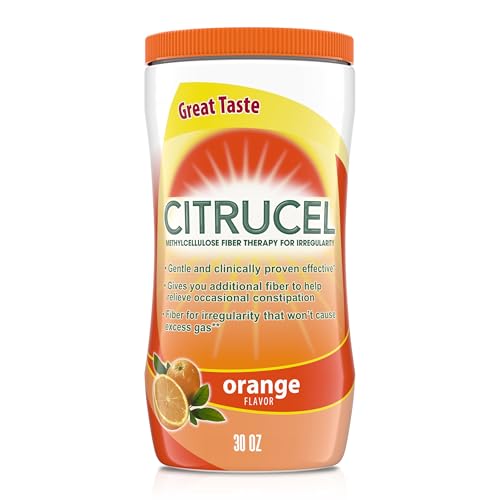
Citrucel
3.3 / 5
Best for Sensitive Stomachs
Citrucel
3.3 / 5
fiberOnset: 12-72 hours (daily use)
“Orange-flavored powder that mixes smoother than Metamucil — no grit. The key difference is it doesn't ferment in your gut like psyllium, so significantly less gas and bloating. Caplet form is large but manageable.”
Citrucel uses methylcellulose, a non-fermentable fiber. That distinction matters enormously for IBS patients: unlike psyllium (Metamucil), methylcellulose doesn't get fermented by gut bacteria, which means significantly less gas and bloating. If you've tried Metamucil and the gas made your IBS worse, Citrucel is the fiber supplement to try next.
Non-fermentable fiber — significantly less gas than psyllium
Smoother texture and milder taste than Metamucil
Available in caplet form to avoid powder mixing entirely
Less clinical evidence than psyllium for IBS specifically
Slower results — takes consistent daily use over weeks
Caplets are large (may be hard to swallow for some)
$18.59 ($0.62 / ounce)
Amazon price as of Oct 21, 2026
#4

Best Probiotic
Culturelle Digestive Daily
3 / 5
Best Probiotic
Culturelle Digestive Daily
3 / 5
probioticOnset: 2-4 weeks for noticeable effects
“Small standard capsules, easy to swallow. No refrigeration needed — shelf-stable, which makes travel easy. No taste or smell. The gummy version tastes like a standard fruit gummy with no medicinal flavor.”
Culturelle contains Lactobacillus rhamnosus GG, one of the most studied probiotic strains for digestive health. It's not a laxative — it won't provide fast relief — but daily use over 2-4 weeks can improve overall gut function and reduce IBS symptom severity. Think of it as long-term infrastructure rather than immediate rescue.
Most-studied probiotic strain for digestive health
Can reduce overall IBS symptom severity over time
Easy daily capsule — no taste, no mixing
Not a laxative — won't help with acute constipation
Takes 2-4 weeks to notice any effect
More expensive than fiber or osmotic options
$17.47 ($0.58 / count)
Amazon price as of Oct 21, 2026
Product Comparison
| Product | Type | Active Ingredient | Onset | Price | Rating | Best For |
|---|---|---|---|---|---|---|
| MiraLAX | osmotic | Polyethylene Glycol 3350 (PEG 3350) | 1-3 days | $29.97 | Daily use | |
| Metamucil | fiber | Psyllium Husk | 12-72 hours (daily use for best results) | $29.99 | Daily constipation prevention | |
| Citrucel | fiber | Methylcellulose | 12-72 hours (daily use) | $18.59 | Sensitive stomachs (less gas than psyllium) | |
| Culturelle Digestive Daily | probiotic | Lactobacillus rhamnosus GG (LGG) | 2-4 weeks for noticeable effects | $17.47 | Long-term gut health support |
Amazon prices as of Oct 21, 2026. “Typically” figures are our estimate of usual retail cost, not a live price.
When to See a Doctor
OTC products work well for most people, but see a doctor if you experience any of the following:
- •Symptoms worsening despite 4+ weeks of OTC treatment
- •Blood in stool or unexplained weight loss
- •Alternating between constipation and diarrhea with no pattern
- •Abdominal pain that interferes with daily activities
- •Need to use laxatives more than 3 times per week
- •You haven't been formally diagnosed with IBS (other conditions can mimic it)
Still struggling with IBS & Chronic? A specialist can help.
A GI doctor can evaluate your symptoms and prescribe treatments not available over the counter. Ask your primary care doctor for a referral, or search for a board-certified gastroenterologist through the American Gastroenterological Association. Many GI practices now offer telehealth consultations.
Frequently Asked Questions
MiraLAX (polyethylene glycol) is the most commonly recommended daily laxative for IBS-C by gastroenterologists. It works gently without triggering cramps or urgency, which is critical for IBS patients. For daily prevention rather than treatment, a fiber supplement like Citrucel (less gas) or Metamucil (more evidence) is the next step.
Yes — stimulant laxatives like Dulcolax and Senokot can absolutely make IBS worse. They force intestinal contractions, which can trigger the cramping, pain, and urgency that IBS patients are already dealing with. Stick to osmotic laxatives (MiraLAX) or fiber supplements (Citrucel, Metamucil) for IBS. Avoid stimulants unless your doctor specifically recommends them.
Yes, if OTC products aren't providing adequate relief after 4-6 weeks of consistent use. A GI doctor can prescribe IBS-C-specific medications like Linzess (linaclotide) or Motegrity (prucalopride) that work through different mechanisms than OTC products. They can also rule out other conditions that mimic IBS, like celiac disease or thyroid disorders.
The evidence is promising but not definitive. Certain strains, particularly Lactobacillus rhamnosus GG (Culturelle) and Bifidobacterium infantis (Align), have shown modest improvements in overall IBS symptoms in clinical trials. They work best as a complement to other treatments, not as a standalone solution. Expect to take them daily for 4-8 weeks before judging effectiveness.
Regular constipation is a symptom — your stool is hard or infrequent. IBS-C is a chronic condition where constipation comes with additional symptoms: abdominal pain that improves after bowel movements, bloating, gas, and a pattern of symptoms lasting at least 3 months. The treatment overlap is significant, but IBS-C often requires more targeted approaches and may benefit from prescription medications.
Related
Sources
- ACG Clinical Guideline: Management of Irritable Bowel Syndrome (2021)
- AGA Clinical Practice Guideline on the Pharmacological Management of Irritable Bowel Syndrome With Constipation (2022)
- The Effect of Fiber Supplementation on Chronic Constipation in Adults: An Updated Systematic Review and Meta-Analysis of Randomized Controlled Trials (2022)
- American Gastroenterological Association-American College of Gastroenterology Clinical Practice Guideline: Pharmacological Management of Chronic Idiopathic Constipation (2023)
- Meta-analysis of randomized controlled trials of the effects of probiotics on functional constipation in adults (2020)
Medical Disclaimer
This content is for informational purposes only and does not constitute medical advice. Always consult a healthcare professional before starting any new medication or supplement, especially if you are pregnant, nursing, taking prescription medications, or have a pre-existing medical condition. Product recommendations are based on publicly available clinical research and are not a substitute for professional medical guidance. Read our full disclaimer.
This article contains affiliate links. We may earn a commission at no extra cost to you. See our full disclosure.