Not medical advice. This content is for informational purposes only, backed by cited research. Consult a healthcare provider for personal guidance.
5 Best Senokot Alternatives (2026)
Updated 2026-08-28 · Sources cited below
Senokot is one of the better products in its category — plant-derived, reliable overnight, gentler than bisacodyl, with stronger trial evidence than most people expect. So why look for an alternative? In practice, three reasons: the cramping still bothers you, you're pregnant or were told to avoid stimulants, or — most commonly — you're using it too often and know it. Each reason points to a different replacement, so this list is ranked by which problem you're solving.
The Reason You're Switching Decides Everything
Using it too often? That's the #1 pattern, and the fix is strategic, not a product swap: MiraLAX (#1) or Metamucil (#4) as the daily base, with senna demoted to occasional backup. Most "I need a Senokot alternative" searches are really "I need to not need Senokot."
Cramping? Any stimulant can cramp — that's the mechanism working. Escaping it means leaving the category: Milk of Magnesia (#2) for speed without stimulation, MiraLAX for gentleness with a longer runway.
Senna specifically disagrees with you? Dulcolax (#3) is the like-for-like swap — same job, different molecule — though it's usually the harsher of the pair, not the milder one.
Told to avoid stimulants entirely? During pregnancy or with certain conditions, the osmotic and fiber options (#1, #2, #4) are the lane; our pregnancy guide covers the specifics.
A Word on the "Lazy Bowel" Worry
A lot of Senokot switching is driven by the fear that senna use creates dependency. We've looked hard at this — and corrected our own earlier overstatement of it: the controlled evidence doesn't support the claim that normal use damages the colon, and senna is legitimately prescribed long-term in specific situations. The real risk is strategic, not anatomical: rescue-only thinking keeps you in the rescue cycle. Whichever alternative you pick, pair it with the boring fundamentals — fiber, fluids, movement — so the rescue products go back to being rare. Details in our laxative safety guide.

MiraLAX
Best Daily-Safe AlternativeThe most common reason to leave Senokot is needing relief more often than a stimulant should be used. MiraLAX is the answer to exactly that: guideline-recommended, cramp-free, and appropriate for daily use with a doctor's guidance. The trade: 1-3 days instead of overnight, so it's a change of strategy, not just of product.
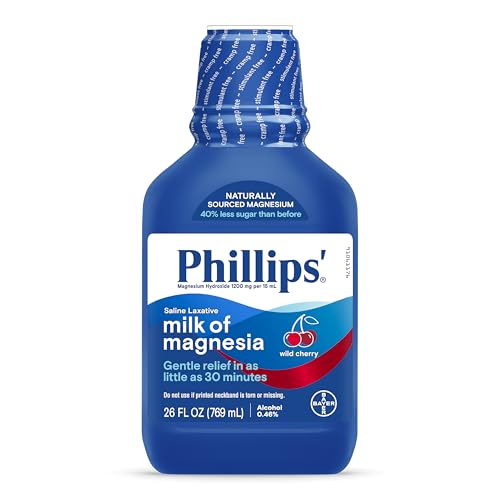
Phillips' Milk of Magnesia
Fastest Non-StimulantIf senna's cramping is what you're escaping but you still want same-day results, magnesium hydroxide works in 30 minutes to 6 hours with no nerve stimulation at all. The hard limit: skip it entirely with kidney problems, and keep it occasional.

Dulcolax
Closest Like-for-Like SwapSame stimulant category, same overnight window, different trigger — synthetic bisacodyl instead of plant sennosides. Worth trying if senna specifically disagrees with you, though for most people Dulcolax is the more crampy of the two, not less.

Metamucil
Best Exit From the Rescue CycleIf you're using Senokot regularly, the real fix isn't a better rescue — it's not needing one. Daily psyllium attacks the usual root cause with solid evidence, and after two weeks most people need their stimulant far less often.

Colace
Gentlest Option — With a Big CaveatDocusate has no stimulation, no cramping, and no urgency — because it doesn't do much. Its best trial showed no benefit over placebo for constipation. It earns a slot only for the don't-strain niche (post-surgery, hemorrhoids); as a Senokot replacement for actual relief, expect disappointment.
Frequently Asked Questions
Sources
Clinical Research & Guidelines
- Senna Versus Magnesium Oxide for the Treatment of Chronic Constipation: A Randomized, Placebo-Controlled Trial (2021)
- American Gastroenterological Association-American College of Gastroenterology Clinical Practice Guideline: Pharmacological Management of Chronic Idiopathic Constipation (2023)
Drug Labels & Regulation
Related
Medical Disclaimer
This content is for informational purposes only and does not constitute medical advice. Always consult a healthcare professional before starting any new medication or supplement, especially if you are pregnant, nursing, taking prescription medications, or have a pre-existing medical condition. Product recommendations are based on publicly available clinical research and are not a substitute for professional medical guidance. Read our full disclaimer.
This article contains affiliate links. We may earn a commission at no extra cost to you. See our full disclosure.